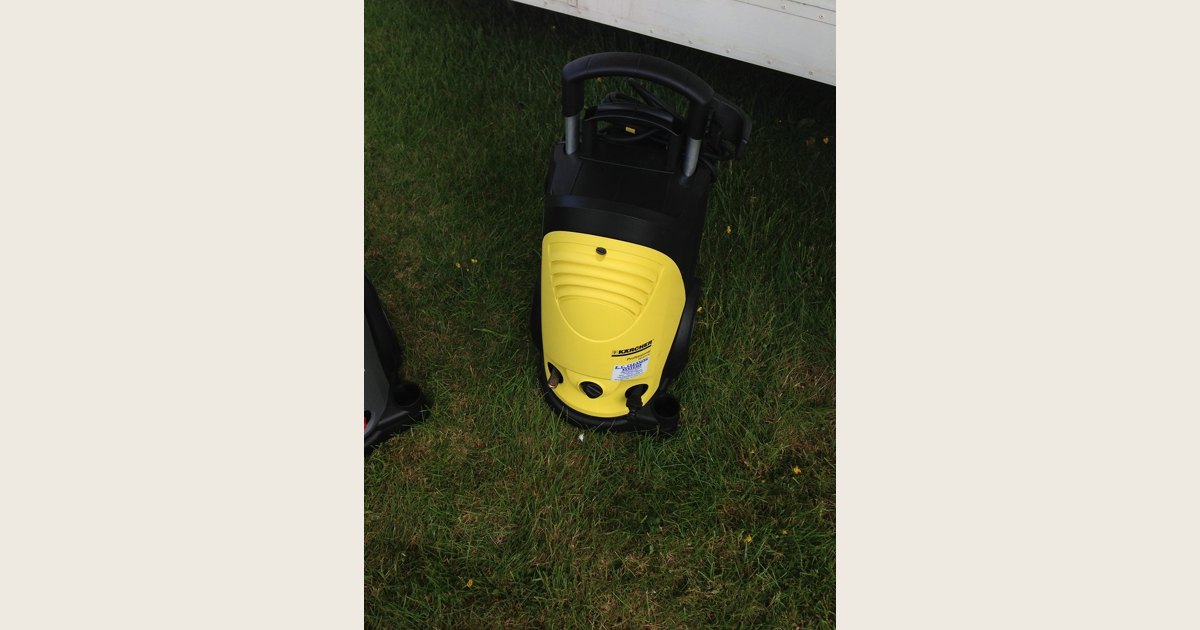
A pressure washer cleans by concentrating water into a powerful stream, so the safest way to use one is to begin gently: check the manual, connect the water supply, purge air, choose the widest approved spray pattern, test an inconspicuous spot, and keep the wand moving. Increase cleaning power only if the surface tolerates it.
This guide covers a typical home-use workflow. Start by locating the manual for your exact model; manufacturers’ support portals can provide pressure-washer manuals, as Generac’s does (Generac). Its nozzle, detergent, electrical, engine, and shutdown directions override every general instruction here—especially where they differ from a general step.
Hero image credit: Illustrative stock photo; no product testing is implied. Photo: Karcher pressure washer by Kai Hendry via Flickr, CC BY 2.0. Resized and padded.
Key Takeaways
- Wear eye protection, clear people and pets from the work area, and never point the wand at a person, animal, or your own body.
- Connect the garden hose and let water flow through the gun before running the pump; never operate a washer without its required water supply.
- Start with the least aggressive nozzle and a test patch. A wider fan and more distance are usually the safer starting point.
- Use only cleaner and settings approved for your particular machine, then rinse before detergent dries on the surface.
- Stop if paint lifts, wood fuzzes, mortar erodes, or water reaches an electrical connection.
Before you start: set up a safe work area
You’ll need the pressure washer, its hose and spray gun, a compatible water supply, the nozzles supplied for that machine, eye protection, closed-toe shoes, and the owner’s manual. Wear clothing that covers your feet and legs; skip loose items that could catch on equipment. Keep children, pets, and bystanders out of the spray area, and move cars, outdoor furniture, planters, and anything that could be damaged by water or debris.
Look over the hose, gun, fittings, and power cord or fuel system before each use. Do not use damaged parts, improvised adapters, or a missing guard. If you have an electric washer, use the outlet, grounding, and weather protections specified in its manual; keep plugs and connections out of standing water.
A gasoline-powered washer belongs outdoors in an open area. Engine exhaust can produce carbon monoxide: the EPA identifies generators and other gasoline-powered equipment as carbon-monoxide sources and notes that high exposure can be fatal (EPA). Never run a gas engine in a garage, shed, basement, or other enclosed or partly enclosed space—even with a door or window open.
How to use a pressure washer step by step
1. Read the controls and prepare the surface
By the end of this step, you’ll know which controls and attachments your machine actually uses. Find the on/off switch or engine controls, water inlet, high-pressure outlet, detergent connection, and pressure-release method in the manual. Confirm which nozzle or adjustable setting is intended for a wide fan, detergent, and tougher cleaning.
Sweep away loose grit first. Cover or move delicate items, shut nearby windows and doors, and protect electrical fixtures, vents, outlets, and plants as appropriate. Don’t assume every exterior material can take pressure: peeling paint, cracked mortar, weathered wood, loose trim, and soft landscaping are all reasons to choose another cleaning method or seek surface-specific advice.
2. Connect the water supply and purge the air
By the end of this step, water should be flowing through the gun without the pump running. With the unit turned off, attach the garden hose to the machine’s water inlet and connect the high-pressure hose and spray gun as the manual directs. Check that each fitting is fully seated and locked.
Turn on the water supply. Point the gun in a safe direction and hold the trigger until water flows steadily. This purges air from the hose and confirms the supply is on. Do not start the washer until the water supply is ready. A pump needs the flow specified by its manufacturer; do not guess that a weak hose, a kinked line, or a small stored-water container is adequate.
If a connection drips, turn the unit off, shut off the water, relieve pressure according to the manual, and reseat the fitting. Never try to tighten a pressurized connection.
3. Start with the least aggressive approved setting
By the end of this step, you’ll have a safe baseline for a test patch. Fit the widest fan-spray nozzle that your manual allows for the material, or set an adjustable wand to its gentlest setting. Nozzle colors are not a universal instruction system: the labels and manual for your own washer control.
Start farther from the surface than you think you need to, trigger the gun only when you have a stable stance, and make one short pass on a hidden area. Look closely after the patch dries or drains. Stop and change methods if you see lifted paint, etched concrete, raised wood fibers, loosened grout or mortar, or water forced behind siding.
Keep both hands on the gun and brace for kickback. A broad fan spreads force across a wider area; a narrower pattern concentrates it. That makes a narrow pattern useful only when the manual and a successful test patch show it is appropriate. Never use the wand to blast dirt from your shoes, hands, or clothing.
4. Clean in controlled, overlapping passes
By the end of this step, the surface will be cleaner without obvious stripes or gouges. Work from a stable, dry position and aim the spray away from windows, electrical equipment, people, and places water could enter the building. Begin at the top of a vertical surface and work downward so dirty water does not run over an area you just cleaned. On a horizontal surface, choose a logical edge and work across it in rows.
Hold the wand at a shallow angle when the material and manual allow it, rather than driving water directly into seams or edges. Move at a steady pace and overlap each pass slightly. Keep the wand moving while the trigger is engaged. Pausing in one spot is the fastest way to make a clean-looking mark that is actually damage.
Release the trigger before repositioning your feet, climbing a ladder, or handling the hose. In general, ladders and pressure-washer recoil are a poor combination; clean from the ground with an appropriate extension only if your equipment maker permits it.
5. Use detergent only when it helps
Detergent can help loosen oily or embedded soil, but it is not automatically the better answer. Use only products and dilution instructions approved for your washer and surface. Some washers draw detergent only in a designated low-pressure setting, while others use a separate application method. Forcing cleaner through an unapproved nozzle or using a household chemical can harm the pump, stain a surface, or create an unsafe runoff problem.
Apply detergent in a manageable section, following the product’s dwell-time directions. Do not let it dry. Then switch to the approved rinse setting and rinse thoroughly, usually working from top to bottom on vertical surfaces. Keep cleaner and rinse water out of ponds, storm drains, and planting beds when the product label calls for it.
6. Shut down and relieve pressure
By the end of this step, the system will be depressurized and ready to store. Follow the exact shutdown order in your manual. Typically, that means turning off the motor or engine, shutting off the water supply, and squeezing the trigger in a safe direction to release remaining pressure before disconnecting hoses. Allow hot engine components to cool before storage or refueling.
Drain hoses as your manual directs and store nozzles where they will not collect grit. If freezing weather is possible before the next use, follow a machine-specific storage procedure; our guide to winterizing a pressure washer explains why leftover water needs attention.
Match the cleaning method to the surface
Pressure is only one part of the equation. Spray pattern, distance, angle, dwell time, detergent, and surface condition matter just as much. Start with a broom, brush, mild cleaner, or ordinary garden-hose rinse when that will do the job.
| Surface or situation | Safer starting approach | Stop or change course when |
|---|---|---|
| Sound concrete or pavers | Wide approved fan; test patch; steady passes | The surface etches, mortar loosens, or joint sand washes out |
| Painted siding or trim | Gentle setting and a hidden test; avoid seams | Paint lifts or water can be driven behind the material |
| Decking or weathered wood | Lowest effective setting, wide fan, careful test | Fibers rise, the grain fuzzes, or the color changes unevenly |
| Windows, screens, vents, and exterior outlets | Clean by hand or use a low-pressure method | Water could enter the opening or damage a seal or connection |
| Vehicles, bicycles, and delicate finishes | Follow the item maker’s care directions | The finish is warm, damaged, loose, or not approved for pressure washing |
A test patch is not a guarantee for an entire surface. Age, existing repairs, shade, coatings, and moisture can vary across the same wall or deck.
Troubleshooting: stop before forcing a fix
The washer pulses or loses pressure
Switch the unit off and consult the manual. Check the water supply, hose, inlet screen, and fittings. Use only the maker’s approved method to clean a nozzle; do not improvise with wire or nails.
Detergent will not draw
Check the manual. Many systems draw detergent only at a designated low-pressure setting. Confirm the pickup tube, dilution, and approved setting before increasing chemical concentration or taking anything apart.
There are streaks, marks, or a damaged patch
Stop spraying. Etched material, lifted paint, or fuzzy wood means the surface received too much force. Let it dry, switch to a gentler method, and do not try to erase damage with a more concentrated spray.
The gun or hose will not disconnect
Assume the system is pressurized. Turn the washer and water supply off, then follow the manual’s pressure-release procedure before touching couplers. Never force one apart.
Frequently asked questions
Can I use a pressure washer on every outdoor surface?
No. Check surface care guidance and your washer manual, then use a hidden test patch and the least aggressive effective method.
Which nozzle should I use?
Use the nozzle or setting your manual specifies. Begin with the widest approved fan and do not choose solely by nozzle color, because configurations differ among models.
Can I use a gas pressure washer in an open garage?
No. Operate it outside in an open area, away from doors, windows, and vents. An open garage is not a substitute for outdoor operation: gasoline-powered equipment can produce carbon monoxide (EPA).
Use power gradually, not by default
Prepare the area, establish water flow, test the mildest approved setting, and keep the wand moving. When a surface resists cleaning, a brush, surface-specific cleaner, or professional help can be a better tradeoff than a permanent mark or water intrusion.