Yes—an air purifier can help with some allergy symptoms by filtering airborne particles, especially when it has an effective particle filter, fits the room, and runs regularly. The benefit is limited: a purifier doesn’t remove allergens already settled on a bed or sofa, stop the source of an allergen, or replace medical care. The U.S. Environmental Protection Agency (EPA) says studies of portable HEPA air cleaners have found improvements in one or more allergy or asthma symptoms, but the improvements aren’t always major and don’t occur across all symptoms (EPA’s Guide to Air Cleaners in the Home).
The practical takeaway: think of a purifier as one layer of indoor particle control, not a cure or a substitute for addressing the trigger. Filter choice, room coverage, placement, and upkeep determine whether the device is likely to be useful.
Key Takeaways
- A portable purifier can filter airborne particles and may ease some allergy symptoms, but it won’t help every person or every symptom.
- Choose a particle-filtering model sized for the whole room or open area; CADR helps compare particle-cleaning capacity.
- Run it where you spend time, keep its airflow clear, and replace filters as directed.
- Filtration works best alongside reducing pollution sources and ventilating with clean outdoor air when appropriate.
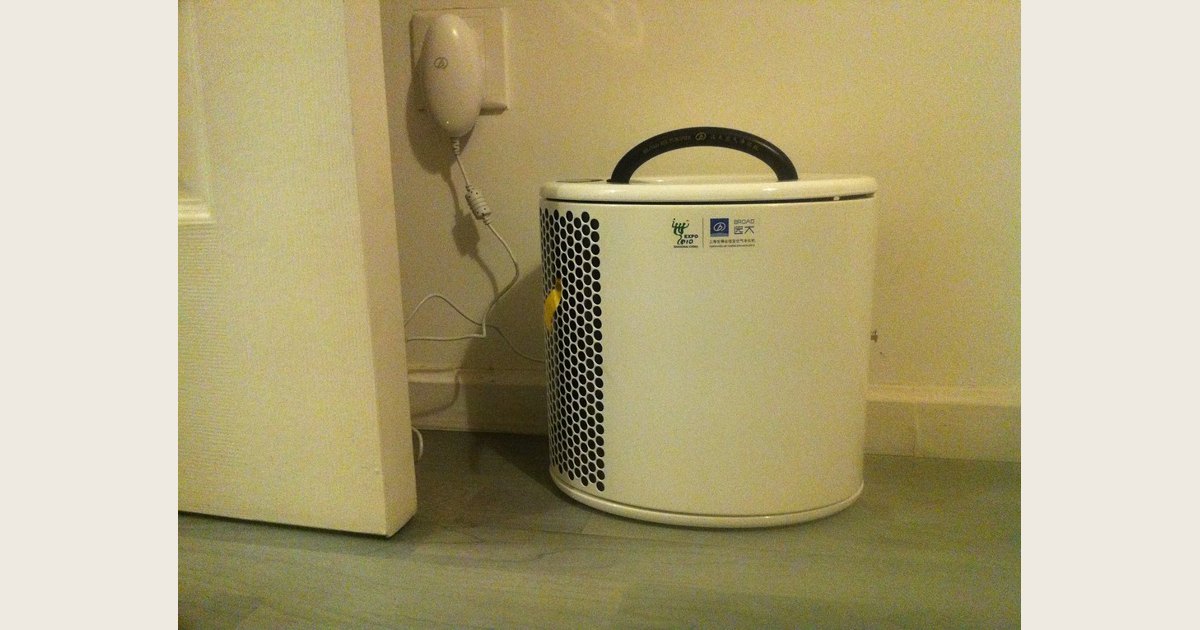
Featured image: a portable purifier beside a wall. Illustrative stock photo; no product testing is implied. Photo by bfishadow, licensed under CC BY 2.0; resized and padded.
What allergy triggers can an air purifier capture?
A purifier with a particle filter can remove some airborne particles as room air passes through it. That can include pollen and other airborne material; a filter cannot collect what never reaches its intake. EPA describes HEPA as a pleated mechanical filter that can theoretically remove at least 99.97% of airborne particles measuring 0.3 microns. That is a filter specification, not a promise that a purifier will remove 99.97% of allergens from an entire room or prevent symptoms (EPA, “What is a HEPA filter?”).
The trigger label alone doesn’t tell you how useful a purifier will be; where the material is matters. For pollen already airborne indoors, a particle cleaner has a direct route to capture it if that air reaches the intake. EPA uses pollen as an example particle in its CADR guidance. For pet-related or dust-mite concerns, a purifier can only filter particles that become airborne and pass through the unit; it cannot clean allergen from bedding, carpet, or upholstery. Clean or launder affected items according to their care instructions and reduce the source where practical. EPA describes filtration as a supplement to reducing pollutant sources and ventilating with clean outdoor air—not a substitute for either (EPA, “Guide to Air Cleaners in the Home”). Its guide does not prescribe pet- or dust-mite-specific cleaning routines, so treat filtration as one part of managing those triggers.
For mold, an air cleaner may remove some mold-related particles, but it won’t fix the moisture problem that lets mold grow. EPA recommends addressing the moisture source and cleaning up the mold.
A basic particle filter also isn’t a general-purpose gas or odor remover. CADR measures particle removal, not gas removal. If gases are the concern, EPA says to look for activated carbon or another filter designed for gases; that is a different job from filtering airborne particles.
How much allergy relief should you expect?
An air purifier may make a difference, but don’t count on a dramatic or universal change. EPA’s review of studies on portable HEPA cleaners says they found improvement in one or more allergy or asthma symptoms in some cases, while noting that studies don’t always show major improvements or improvements in every symptom. Individual results depend on the trigger, the room, and how the cleaner is used.
A reasonable expectation is lower airborne particle levels in the space the unit serves—not an allergen-free home. A single portable cleaner is designed for one room or area. It can’t clean air in closed-off rooms, and a small unit may be inadequate for a large or open-plan space. Nor can a filter prevent new particles from entering or being released indoors.
This is why source control remains important. EPA identifies reducing or removing pollutant sources and ventilating with clean outdoor air as the most effective ways to improve indoor air; filtration is a supplement. If allergy symptoms persist or interfere with daily life, discuss them with a qualified health professional rather than relying on a purifier alone.
What should you look for in an air purifier?
For airborne allergy particles, start with a mechanical particle filter—often a HEPA filter—and enough clean air delivery rate (CADR) for the room. EPA says many portable cleaners achieve a high particle CADR using HEPA filters, but the rating and coverage still matter. Don’t treat “HEPA” by itself as proof that a device can clean a large room quickly.
CADR is a particle-cleaning measure: a higher rating means more particles removed and a larger area served. EPA’s guide provides these estimated minimum CADRs for rooms with 8-foot ceilings:
| Room area | Estimated minimum CADR |
|---|---|
| 200 sq. ft. | 130 cfm |
| 300 sq. ft. | 195 cfm |
| 400 sq. ft. | 260 cfm |
| 600 sq. ft. | 390 cfm |
These are estimates, not guarantees. Measure the room by multiplying its length by width, and check the product’s recommended area. For an open floor plan, account for the whole space the unit is expected to serve; higher ceilings may call for a higher CADR. The rating is typically measured at the cleaner’s highest speed, so consider whether its noise will make you turn it down or switch it off. EPA notes that higher fan speeds generally filter more air.
Also check that replacement filters are available and that the ongoing filter changes fit your budget. If you mainly want particle removal, don’t pay extra for gas-removal features unless you need them. And avoid units that intentionally produce ozone; EPA warns ozone is a lung irritant and advises against ozone generators in occupied spaces (EPA ozone guidance).
Where should you put it, and how should you run it?
Place the cleaner in the room where you spend the most time, then use it for as long as practical. EPA says higher fan speeds and longer run times generally increase the amount of air filtered. A lower, quieter setting that stays on may be more useful in practice than a louder setting that gets switched off—but follow the manufacturer’s instructions for the model.
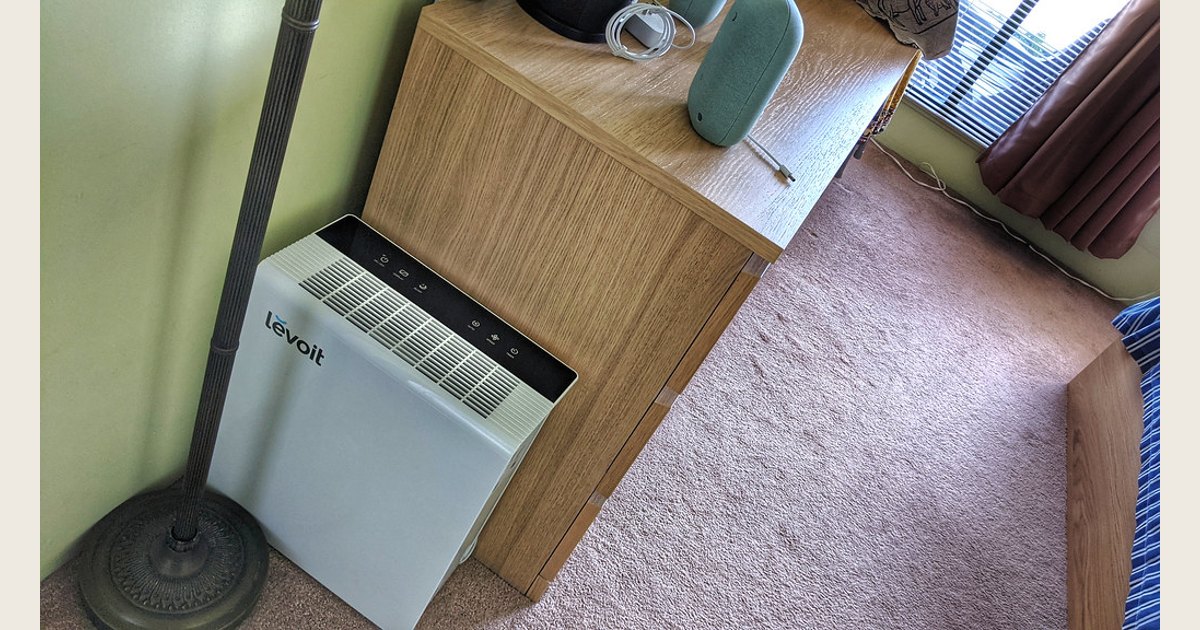
Use this room view as a reminder to check—not copy—the placement: keep the intake and outlet clear, and follow the clearance guidance for your model. The photo does not establish that this particular setup meets a manufacturer’s requirements or show measured performance. Illustrative photo of a Levoit LV-PUR131S by Dennis S. Hurd, licensed under CC BY 2.0; resized and padded.
Keep the air intake and outlet clear. Curtains, walls, furniture, or other obstructions can interfere with airflow. If the unit creates an uncomfortable draft, redirect it rather than blocking the vents. One portable cleaner generally serves its designated room or area, not the entire home.
Replace the filter on the schedule in the product instructions. EPA cautions that a dirty, overloaded filter won’t work well. Don’t assume a filter is washable or reusable unless the manufacturer says so. If your purifier seems ineffective, check the room size, fan setting, airflow clearance, and filter condition before concluding that filtration cannot help.
What an air purifier cannot do
An air purifier can’t eliminate every indoor pollutant or address every allergy trigger. It doesn’t remove the source of pollen entering through an open window, clean settled allergens off surfaces, or repair a leak or damp area that is allowing mold to grow. EPA says to fix the moisture source to solve a mold problem; a purifier may catch some particles but isn’t mold remediation.
It also won’t reliably handle gases just because its packaging lists a high CADR. CADR is for particles. Gas removal requires an appropriate filter such as activated carbon, and EPA notes there isn’t a widely used performance rating system for those gas-removal filters. Don’t assume one device handles every pollutant equally well.
Be cautious about “air cleaning” technologies that intentionally generate ozone. EPA says no federal agency has approved ozone generators for use in occupied spaces; at concentrations within public-health limits, ozone generally doesn’t control indoor pollution effectively, while ozone itself can irritate lungs. Some ionizers, plasma cleaners, or UV devices may also have the potential to emit ozone, so check the technology and independent certification information rather than relying on broad marketing claims.
Is an air purifier worth trying for allergies?
It may be worth considering if airborne particles are a likely trigger and you can run a properly sized particle-filtering unit in the room where you spend time. The strongest practical setup is not just a particular appliance: it is an appropriately sized filter, clear airflow, regular use and maintenance, plus sensible steps to reduce sources and ventilate with clean outdoor air when conditions allow.
If those limits sound acceptable, compare the ongoing filter cost and noise as well as the purchase price. For a broader decision about cost, upkeep, and what a purifier can realistically deliver, see our guide to whether air purifiers are worth it. A purifier is an optional aid—not a medical treatment—and symptom relief is not guaranteed.