A good suction-power spec is not a universal number. It is a clearly defined number you can compare only when the same measurement and test conditions are used. A listing might report air watts, pressure, airflow, water lift, or electrical input watts; these describe different things. Even an air-side figure is not a whole-floor cleaning score: the floorhead, brushroll, filtration, seals, and surface all shape pickup.
So, do not shop for a single “good” Pa, air-watt, or wattage target. First match the vacuum to your floors and jobs. Then compare like-for-like published specifications, and treat an isolated headline number as incomplete information.
Quick takeaway: A higher figure in the same metric, measured under the same method and mode, may be a useful clue. A higher number in a different metric—or with no test method—does not prove better whole-vacuum cleaning.
Why there is no one good suction number
“Good” depends on what the vacuum has to do. A vacuum for bare floors needs controlled pickup that does not scatter debris or risk rough contact with the finish. A machine for dense carpet has to move through the pile while its floorhead and brushroll lift embedded debris. Handheld use, stairs, upholstery, pet hair, and long hose runs create different demands again.
The number on a product page is usually a measurement of one part of the air system, often under a particular setup. It is not automatically a score for every floor, attachment, power mode, or bin condition. A specification can help narrow choices, but it cannot replace details about the floorhead, included tools, maintenance, and the test basis.
That is why a product listing that simply says “powerful suction” or gives one large number without naming the unit and conditions is not very useful for comparison.
What common vacuum specifications mean
Vacuum makers may publish no suction metric, or may use different metrics for different product lines. Here is how to read the most common ones.
| Specification | What it describes | What it can tell you | What it cannot tell you alone |
|---|---|---|---|
| Air watts (AW) | An air-side figure; BestVacuum’s explainer calculates it from airflow and water lift | Combines an airflow reading and a suction reading in one figure | A universal cleaning score or floor-specific pickup result |
| Pascals (Pa) / kilopascals (kPa) | Pressure difference, often presented as a suction figure | Pressure under the conditions used for that reading | How much air is moving or how well a floorhead collects debris |
| Sealed suction / water lift | Pressure measured at a sealed opening; water lift is one way to report it | Pressure capability in that sealed setup | Air movement through an open floorhead during cleaning |
| Airflow (for example, CFM or L/s) | Volume of air moving over time | Air movement in the stated setup | Pressure or floor-specific pickup by itself |
| Motor/input watts | Electrical input power for the motor or appliance | The stated electrical input, if the basis is clear | Airflow, pressure, air watts, or debris pickup directly |
A pascal (Pa) is a pressure unit; a watt (W) is a power unit, so the labels are not interchangeable. NIST describes the SI system’s base and derived units, while the BIPM SI Brochure is its international reference. For vacuum-specific distinctions, BestVacuum’s specification explainer separates motor input watts, airflow, and water lift. It is a retailer explainer, not a published independent test or named standard.
Are air watts the best number to use?
Air watts can make a single figure from airflow and pressure-related readings. BestVacuum describes air watts as a calculated output figure and gives a formula using airflow in cubic feet per minute and water lift in inches. But that retailer page does not name a standard test method, and the formula does not turn an air-watt rating into a universal floor-cleaning score. Treat it as meaningful only if the manufacturer explains how and where the underlying readings were taken.
If a listing gives air watts, look for answers to these questions:
- Is the number tied to a particular mode, such as maximum or boost?
- Is it measured at the cleaner inlet, the hose, or a floorhead?
- Does the manufacturer identify a test method and conditions?
- Are you comparing the same kind of rating and similar setup?
If the answer is unclear, use the number as background—not as a deciding score.
What does a high Pa rating mean?
Pa stands for pascal, an SI pressure unit. A Pa value alone says nothing about the volume of air moving through the system. Similarly, a sealed-suction or water-lift reading describes pressure in the sealed setup, not collection through a floorhead with an open air path. The retailer specification explainer distinguishes airflow from water lift, but does not establish how any particular vacuum will clean your rug or floor.
That is why two robot or stick vacuums with different Pa claims may not behave as their headline numbers suggest on the same rug. For more on the surface side of that decision, see our guide to whether robot vacuums work on carpet.
Why motor watts are not suction power
Electrical input watts describe the power an appliance draws; they do not directly report air movement, pressure, or floor pickup. BestVacuum’s specification explainer also cautions that a motor-input rating does not account for the motor’s efficiency or overall vacuum design. Compare electrical watts as an input specification, not as a substitute for a cleaning result.
The floorhead matters as much as the suction path
A vacuum is a system, not just a motor and a number. The floorhead determines how the vacuum meets the surface. Its openings, seals, wheels, height adjustment, and brushroll can help or hinder the air system.
For hard floors, prioritize a setting or tool designed to avoid aggressive brushing and to collect small debris rather than push it around. For carpet, consider whether the vacuum has the appropriate brushroll action, height adjustment, and a floorhead that can still move across the pile. Our guide to choosing a vacuum for hardwood floors covers the floor-protection questions that a suction rating cannot answer.
Attachments matter, too. A crevice tool creates a narrow, more restrictive air path; an upholstery tool works across fabric; a motorized mini tool adds mechanical agitation. One inlet measurement cannot predict every tool’s results.
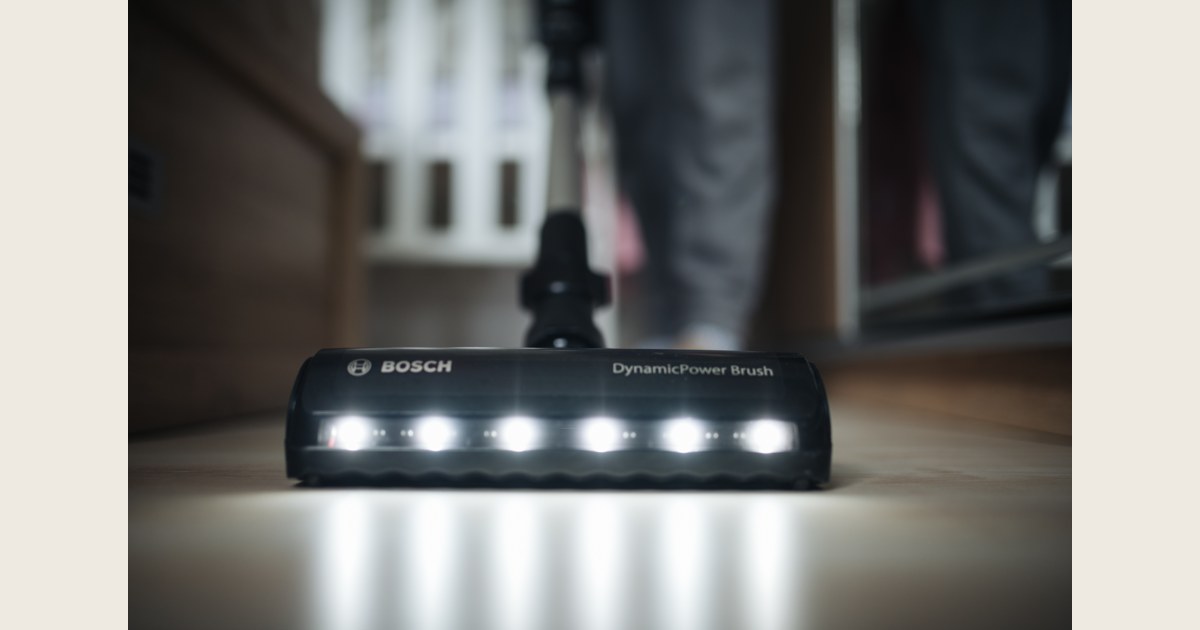
Photo: Efficient cleaning with modern vacuum technology in a well-lit indoor space by Shixart1985, https://commons.wikimedia.org/w/index.php?curid=190519528; https://creativecommons.org/licenses/by/2.0/. Resized and padded. Illustrative floorhead photograph, not a suction or pickup test.
A practical way to compare vacuum listings
Use this five-step check instead of hunting for one magic number.
- Start with the job. List your main surfaces, whether you need to clean stairs or upholstery, the kind of debris you regularly face, and any filtration or noise concerns.
- Identify the metric. Is the listing quoting Pa, air watts, airflow, sealed suction, or only electrical watts? Do not compare numbers with different units.
- Look for the conditions. Note the power mode, attachment, test location, and method. “Maximum” without context is a limited claim.
- Compare the whole setup. Check the floorhead, brushroll control, included tools, dust capacity, filtration design, weight, runtime for cordless models, and replacement-filter availability.
- Prefer evidence you can interpret. Clearly described test conditions or a transparent in-house test are more useful than an unexplained superlative. Independent floor-specific pickup testing, when available from a reputable test publisher, can add context that a manufacturer spec cannot.
This approach is also a guardrail against false precision. A precise-looking number is not necessarily a useful comparison unless you know what was measured.
How to tell whether your current vacuum has lost suction
If a vacuum once cleaned well and now seems weak, the answer may be maintenance or an obstruction—not a need to judge its original Pa or air-watt rating again. Disconnect power before inspecting parts, and follow the model-specific manual for washable versus replaceable filters.
Work through this order:
- Empty the bag or bin before it is overfilled.
- Check the filter and clean or replace it exactly as the manufacturer directs. Do not reinstall a washable filter while damp.
- Look through the floorhead, wand, hose, and crevice tool for blockages.
- Remove wrapped hair or threads from the brushroll according to the manual.
- Refit the bin, hose, and floorhead firmly; a poor seal can reduce airflow.
- Check whether the correct floor setting and suction mode are selected.
BISSELL’s low-suction guidance for its Symphony vacuum and steam mop identifies a full dirt container, dirty filters, improperly installed parts, and a hose-tube connection as possible causes for that model. These are examples to consider, not a diagnosis for every vacuum; use your own model’s manual for inspection and care.
The bottom line: choose a comparable spec, then choose the right vacuum system
There is no authoritative single number that makes a vacuum “good” for every home. A high Pa number alone is not enough. Sealed suction alone is not enough. Motor watts are not a direct suction rating. Air watts can be a better all-in-one clue, but only under comparable conditions.
The most useful buying decision pairs transparent specifications with the right floorhead, brushroll, tools, filtration, size, and maintenance needs for your home. If the number is vague, do not let it outweigh the details that determine day-to-day cleaning.
Sources
- BestVacuum.com: Understanding Vacuum Cleaner Specifications — retailer explainer distinguishing airflow, water lift, air watts, and motor input; it does not identify a named test standard.
- BISSELL: Low Suction — Symphony Vacuum and Steam Mop — manufacturer troubleshooting directions for the named Symphony model.
- NIST: SI Units — general SI background, not a vacuum-performance standard.
Featured image credit: Photo: Vacuum cleaner by Karolis Live, CC BY 2.0. Resized and padded. Illustrative stock photo; no product testing is implied.